
The number one reason we get the question of, “Can I install a furnace in my attic” is because the customers asking want to save space. And we get it! It is possible to do this, however, there are a number of factors to consider.
Usually, a furnace is going to be installed in the basement, or garage area if a basement isn’t available. If there’s no garage or too little garage space, that severely limits your options, taking up too much space that would otherwise be usable.
So, attic furnaces started gaining popularity. Whether it’s a good idea for your specific home or not will depend on how you relate to the following pros and cons.
Pros of Installing a Furnace in the Attic
Space Saving: As we mentioned above, many people choose an attic installation for their furnace because of the space-saving features. Having an entire closet or corner of the garage dedicated to a furnace isn’t ideal for anyone, and attics are rarely used for anything more than storing a few things anyway.
Potentially More Affordable Installation: Venting a furnace takes less work in an attic than it does in any other location of the home. Unless you have a slab, venting can go directly through the roof rather than routing it through an exterior wall. This makes ductwork installation easier too, therefore resulting in a more affordable professional furnace installation service.
A Design That Works for All Homes: There is almost no home without an attic. Unless you live in a multi-home complex where the attic is inaccessible to you, this option is very widely available. And since furnaces have a downflow design, this product works in just about any type of home.
Multiple Installation Options: So long as you have proper venting and alarm systems available to detect any leaks, a natural gas furnace can be installed in your attic just as easily as an electric model.
Cons of Attic Furnace Installation
Can Lower Efficiency: We do recommend that if you choose a long-lasting furnace for attic installation, that you get one with the highest level of efficiency. Warmer temperatures rise to displace colder air, so you may need to turn your thermostat up even higher to enjoy the heat at the lowest points of your home—this means you aren’t using your furnace as efficiently as possible.
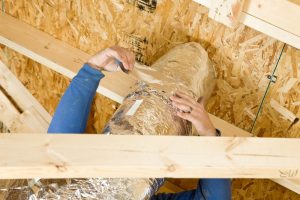
Ductwork Can Suffer: During the summer, rooftops get hot. Attic fans help, but the fact is that your ductwork is exposed to high heat, and therefore can start succumbing to it by accumulating small tears and pinhole leaks. This is a risk for any type of attic insulation of course, but when your furnace is in the attic, it means that ductwork is already getting hot for part of the year.
Problems Can Go Undetected: One of the most common signs of a furnace in disrepair is funny noises coming from the unit. If it’s all the way up in your attic, it can be harder to detect these noises, and therefore harder to know when something is amiss with your furnace heat exchanger.
Only Trust a Licensed Tech for Installation!
No matter what you choose to do with your furnace—go ahead and have it installed in the attic or installed in another location in your home—you should always only trust a trained and experienced professional for the job. Only they will have the know-how and the skills to make sure that your furnace installation is done in such a way that it is safe, and as efficient as possible.
Frequently Asked Questions
Question: Can a furnace be installed in an attic?
Answer: Yes, a furnace can be installed in an attic when the space allows for proper venting, safe access, and correct installation. Homeowners often consider this option to save space in a garage, closet, or utility area. A licensed HVAC technician should always evaluate whether the attic is suitable.
Question: What are the benefits of putting a furnace in the attic?
Answer: An attic furnace can free up usable living or storage space elsewhere in the home. It may also simplify venting and ductwork in some layouts, which can make installation more practical. Since most homes have attic space, this setup can be an option when basements or garages are unavailable.
Question: What are the disadvantages of an attic furnace?
Answer: An attic furnace may operate less efficiently because warm air naturally rises, which can make it harder to heat lower parts of the home evenly. Attic heat can also affect ductwork over time, and furnace problems may go unnoticed because the system is farther from daily living areas.
Question: Is an attic furnace harder to maintain?
Answer: Yes, maintenance can be more difficult because the furnace is less accessible than a unit in a garage, basement, or utility closet. Strange noises, leaks, or performance issues may be harder to detect. Regular professional inspections are especially important so small problems do not turn into larger repairs.
Question: Should I hire a professional to install a furnace in the attic?
Answer: Yes, attic furnace installation should be handled by a trained and licensed HVAC professional. Proper venting, safe placement, leak detection, and efficient setup are all essential. A professional can determine whether a gas or electric model is appropriate and make sure the installation is safe for the home.
Whatever your professional heating needs may be, Wall Heating & Air Conditioning, Inc. is here for the job! Contact us today for expert Alpharetta, GA HVAC services.